

Last time we covered the North West. Now we’re heading down to the Midlands, a region shaped as much by its industrial past as by whatever’s naturally in the ground. Old mine workings, heavy clay, dense city centres, it’s a lot to think about before anyone breaks ground.
Built on centuries of mining
The Black Country in particular sits above a dense web of old coal, iron and limestone workings, some of it going back hundreds of years. The industry’s long gone, but the tunnels, shafts and workings underneath haven’t. Coal Authority records cover a lot of it. They don’t cover all of it, not by a long way, and older or informal workings often slipped through without ever being properly mapped.
Build on former mining land around Dudley, Walsall or Wolverhampton and you’re taking on real uncertainty. A site can look completely stable on top and still have voids or loose ground several metres down from workings that collapsed years ago, or were simply left as they were. Piled foundations that skip past that layer and reach solid, stable ground are usually the safer route, rather than trusting that whatever’s below is fine.
Heavy clay and its moods
Away from the coalfields, much of the Midlands sits on heavy boulder clay and mudstone. Warwickshire, Staffordshire, parts of Worcestershire, it holds water well and moves with the seasons more than people expect. Wet and it expands. Dry and it shrinks back. That cycle puts a lot of pressure on shallow foundations, especially anywhere with mature trees or hedgerows nearby.
Mini piling handles this well because the piles go past the depth where that seasonal movement happens. It’s a similar issue to the clay we talked about in the North West, though Midlands clay tends to be heavier and more uniform across larger areas, which changes how you design around it.
Birmingham’s dense urban core
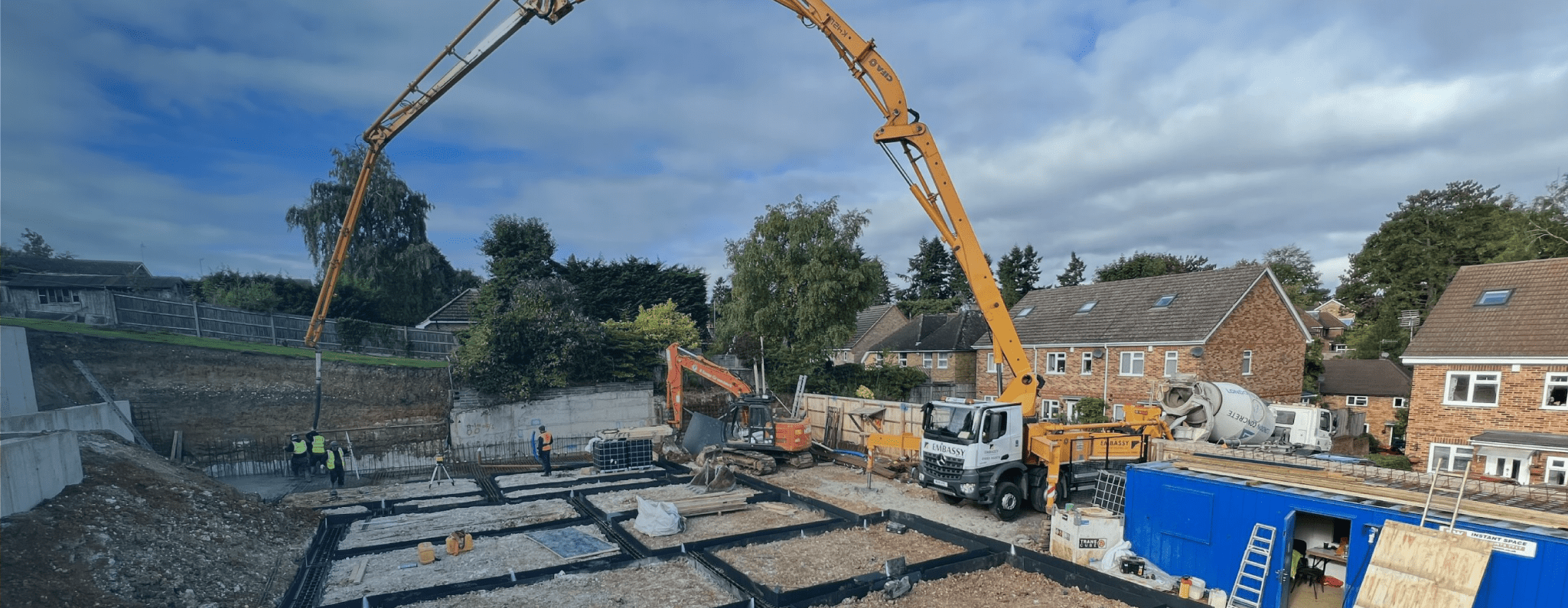
Birmingham brings a different problem entirely, and that’s density. It’s the UK’s second largest city, and a lot of its centre and surrounding suburbs are packed tight with barely any room to work. Terraced streets, narrow yards, commercial units squeezed together. Getting standard plant onto these sites is often just not possible.
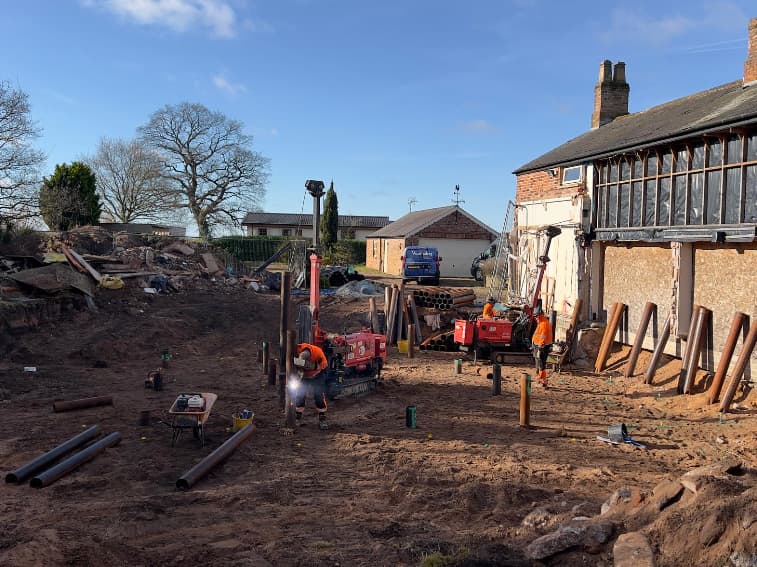
That’s exactly where restricted access piling proves its worth, again and again. Compact rigs can get into a tight courtyard or through a narrow entry that would stop a full sized rig dead. Whether it’s a commercial unit in the Jewellery Quarter or a rear extension on a terrace in Selly Oak, having equipment that actually fits often decides whether the job happens at all.
Industrial legacy beyond mining
The Midlands was the engine room of British manufacturing for a long time, and that history is still under the ground in a lot of places. Old factories, foundries, industrial yards, plenty of them have been redeveloped for housing or commercial use since, and what’s underneath can be a mix of demolition rubble, old foundations and general fill.
Ground like that isn’t consistent enough to build on directly. Piling through it to reach proper load bearing strata is the safer bet, alongside sound excavation and groundwork practice, and it means doing a careful site investigation first, since made ground can vary wildly even within one plot.
A region shaped by what came before
The Midlands is a good example of how history writes itself into the ground. Mining, heavy clay, a manufacturing legacy, all of it adds up to foundation work that needs care and a bit of local knowledge. Knowing what’s likely down there, an old shaft, shifting clay, a stretch of industrial fill, is half the job before anyone drives a pile. If you’re planning a project on former industrial or mining land in the Midlands, get in touch and we’ll talk you through it.
Next time we’re heading south to London and the South East, where London clay and high water tables bring their own headaches. That’s part three.