

Last time we headed north to Scotland. Now we’re heading over to Wales, a country where old mining valleys, coastal towns and a lot of hilly terrain all bring their own particular ground conditions into play.
The Valleys and their mining legacy
South Wales is defined, in large part, by its Valleys, and by the coal mining industry that shaped them for well over a century. Places like the Rhondda, Merthyr Tydfil and the Ebbw Valley sit above extensive old workings, much like the Midlands and North East we covered earlier in this series. The difference here is the terrain. Valleys mean slopes, and a lot of former mining land in South Wales is built on ground that’s both undermined and sloping at the same time.
That combination calls for real care. A site might have old shafts or workings a few metres down, and also sit at enough of an angle that ground creep or slippage is a genuine concern. Piling down past the affected layer to solid, stable ground is usually the safest way to build here, and it’s not a job to take shortcuts on given the history involved.
Terraced housing on hillsides
Much of the Valleys’ housing stock is Victorian terraces, built in long rows that climb the hillsides in a way that’s instantly recognisable. Extending one of these properties brings the same access problems we’ve seen in terraced housing elsewhere in the UK, narrow streets, tight yards, shared boundaries, but with the added complication of the slope itself.
Mini piling rigs handle this combination well. They’re compact enough to work in confined spaces and flexible enough to be positioned on uneven or sloping ground without needing extensive levelling beforehand. For a rear extension in Pontypridd or a side extension in Merthyr, that flexibility is often what makes the job possible at all.
Coastal towns and soft ground
Away from the Valleys, Wales has a long and varied coastline, from the Gower Peninsula down to Pembrokeshire and up along the North Wales coast near Llandudno and Colwyn Bay. Coastal towns here often sit on soft, sandy or alluvial ground, sometimes reclaimed from the sea over the years, and building close to the coast brings a higher water table and a real risk of ground movement.
Piled foundations that reach past this soft surface layer down to something more stable give coastal developments the kind of long term reliability that a shallow foundation simply can’t offer, particularly given how exposed these sites can be to weather and tidal conditions.
Rural Wales and restricted access
Much of Wales is rural, and rural sites bring their own access challenges, farm buildings down long, narrow tracks, cottages tucked into hillsides, converted barns with no proper road access at all. Getting standard construction plant to some of these locations simply isn’t realistic.
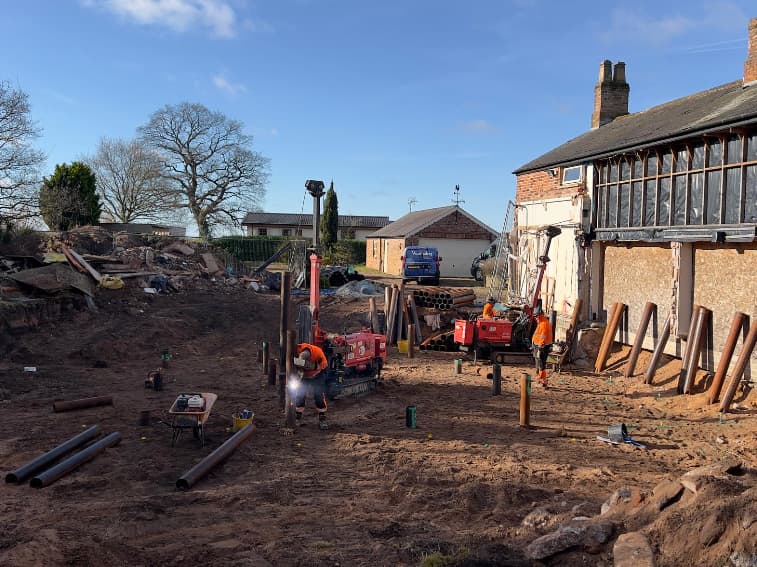
Restricted access piling fills that gap. Smaller rigs can be transported to and manoeuvred around sites that would stop larger equipment before it even arrived, which matters a great deal for barn conversions and rural extensions across mid and west Wales.
Cardiff and the growing cities
Cardiff, Swansea and Newport have all seen a fair amount of development over recent years, and city centre sites bring the density problems familiar from elsewhere in this series. Tight urban plots, restricted access and made ground from decades of dock and industrial use around Cardiff Bay in particular all point towards mini piling as the practical choice for foundations that need to work within a small footprint.
A country shaped by its landscape
Wales brings together mining history, steep terrain, a long coastline and plenty of rural isolation, often within a fairly short distance of each other. It’s a country where the ground genuinely changes character from one valley to the next, which is exactly why local knowledge and a proper site investigation matter so much before any piling work begins. Take a look at our recent work or get in touch if you’ve a Welsh project in mind.
Next time we head down to the South West, where soft coastal ground and granite moorland bring a very different mix of challenges. That’s part seven.