
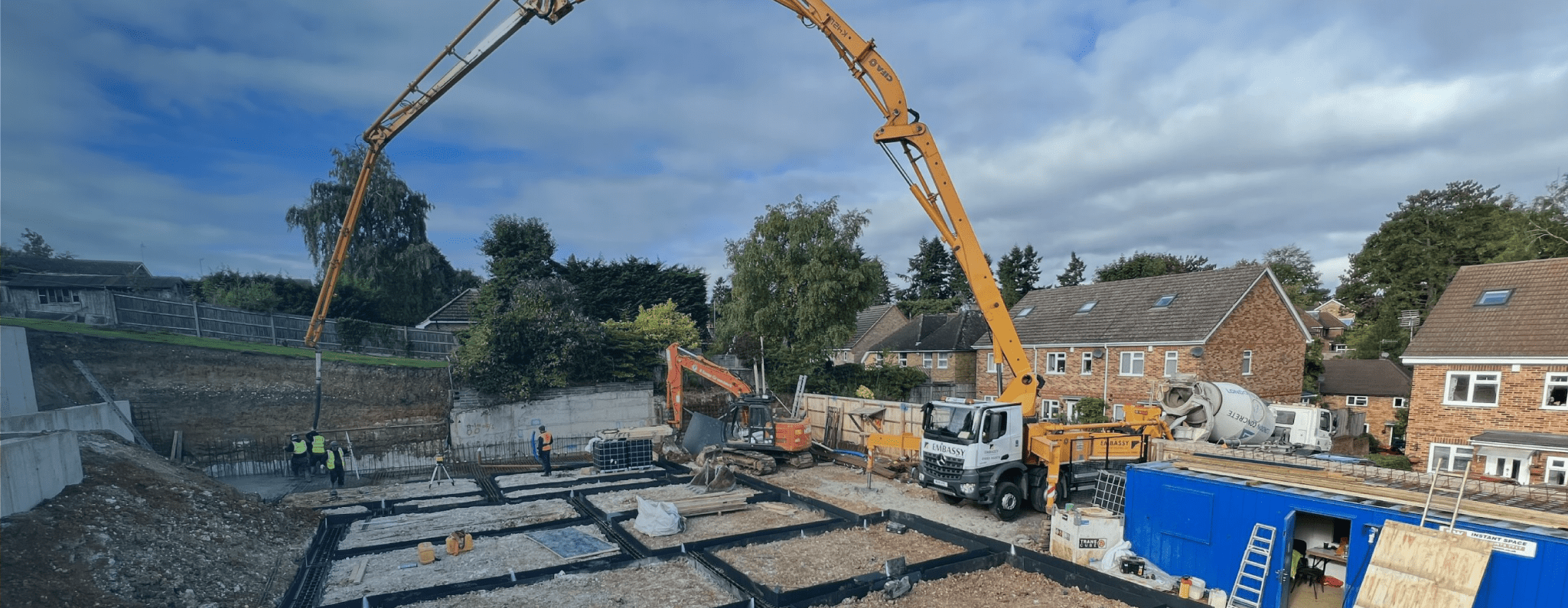

We’ve covered the North West and the Midlands so far. Now it’s London and the South East, and if there’s one ground condition that London is known for above all others, it’s the clay.
The famous London clay
London clay sits under most of Greater London and stretches out into parts of Essex, Kent and Hertfordshire. It’s stiff and fissured, and it actually did engineers a favour when the Underground was being tunnelled, since it holds its shape well once excavated. Above ground it’s a different story.
This clay reacts strongly to moisture. Hot, dry summers and it shrinks noticeably. Wet winters and it swells back up. That shrink swell cycle is one of the biggest causes of subsidence in the capital, particularly in Victorian and Edwardian properties built on shallow foundations. Mature trees near a building make it worse, since the roots pull moisture out of the clay and exaggerate the shrinkage. Piled foundations that go below the depth affected by all this seasonal movement hold up far better than a shallow strip foundation ever could.
High water tables and made ground
The South East also deals with high water tables in a lot of areas, particularly near the Thames and its tributaries. Land built up or reclaimed over centuries along the riverside often sits on soft alluvial deposits, sometimes mixed with made ground from years of urban development. Build on that without piling down to something genuinely stable and you’re setting yourself up for settlement problems that are far more expensive to fix later than to plan for now.
The density problem
Access was tight in Birmingham’s terraces. London takes that to another level. Property prices in the capital mean every square metre matters, and extensions, basement conversions and infill developments have become the go to way for homeowners and developers to add space without buying a bigger plot. Trouble is, London’s streets weren’t built with modern construction plant in mind.
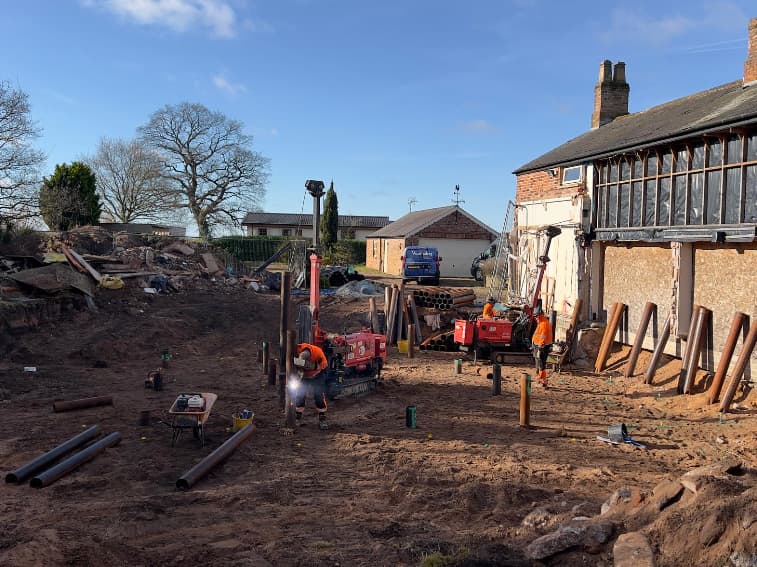
Mini piling has become close to essential here. Rigs that can work in a small back garden or a narrow side return let foundation work happen on sites that would otherwise be completely off limits to standard plant. Basement extensions especially, which have taken off across boroughs like Kensington and Chelsea, often depend on piling that can operate inside an already excavated space with barely any room to move.
Historic buildings and underpinning
The South East also has more than its fair share of listed and historic buildings, many built for a purpose and a load that’s since changed completely. Turning a Georgian townhouse into flats, or adding a modern extension to a listed building, usually means underpinning to strengthen foundations that were fine for their original use but need help for anything more.
Mini piling lets you underpin buildings like this without disturbing much of the existing structure, which matters a great deal on a property with heritage protections. It’s slow, deliberate work, often done in phases so the building isn’t put under too much strain at once.
A region defined by pressure
Whether it’s London clay expanding and contracting with the seasons, or the sheer pressure of building on some of the most expensive, tightly packed land in the country, the South throws up challenges few other UK regions can match. Getting foundations right here isn’t a nice to have. It’s the difference between a stable long term investment and years of ongoing problems. Have a look at our past projects or get in touch if you’ve a site in the South you’d like assessed.
Next time, the final part of the series takes us up to the North East, where old coalfields and sloping terrain bring a different set of issues altogether. That’s part four.